 Align
AlignThe Boardroom Where Deals Stalled
Commercial Office · Midtown Manhattan
Private equity firm, 22nd floor — New York

Six consecutive quarters. No closed deals in that room.
The firm had brought in a pitch consultant, rewritten their deck three times, and replaced the AV system. The boardroom on the south side of the 22nd floor had hosted forty-seven meetings in eighteen months. None converted. The partners had stopped scheduling client presentations there without being able to say why.
A commanding seat facing the door. Nothing else mattered.
The primary client chair faced a solid wall — the presenter's back to the entrance. In classical feng shui, this is the vulnerability position: no sightline to the door, no sense of command. The compass confirmed it. The room's northwest sector, governing helpful people and contracts, was occupied by a structural column wrapped in dark stone.
The table rotated forty degrees. The column dressed in brass.
Seating reoriented so the client chair commanded a diagonal sightline to the entrance. The column clad in warm-toned material to activate rather than suppress the northwest energy. A single curved object introduced to soften the room's hard geometry. No renovation. Completed in an afternoon.
“The first meeting in the reconfigured room closed the same week. We haven't tracked the room since — we don't need to.”
The Bedroom That Refused Sleep
Residential Penthouse · Pacific Heights, San Francisco
Founder, Series C company — San Francisco
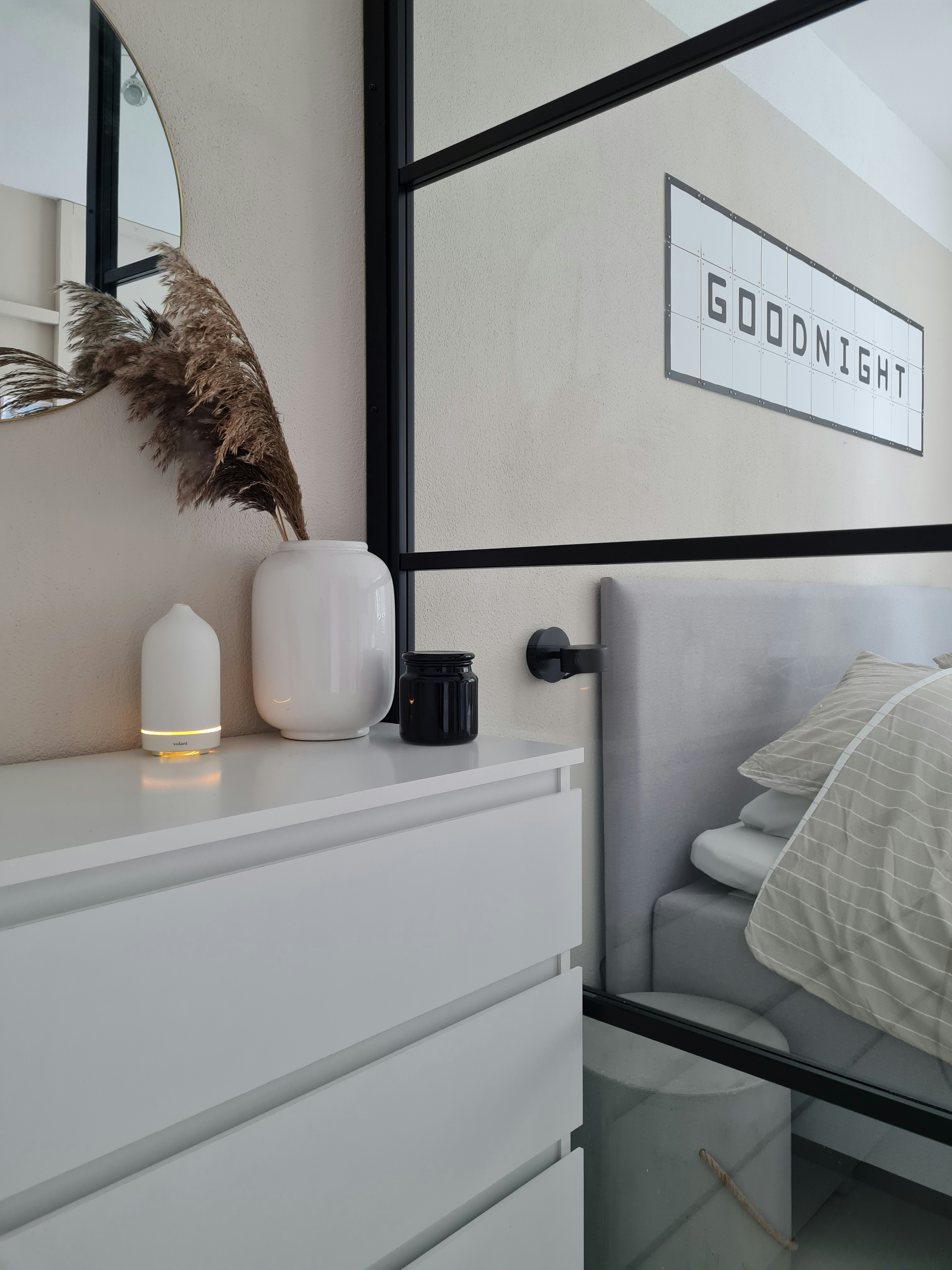
Ninety-three nights. Sleep trackers. Three different mattresses.
After closing a $40 million round, the founder moved into a new penthouse. Within two weeks, sleep collapsed entirely. Nights spent awake at 3am with racing thoughts. The bedroom was beautiful — custom cabinetry, blackout shades, temperature-controlled. The problem was invisible.
The bed faced the door directly. The door faced east.
The coffin position: bed in direct line with the doorway, feet pointing toward the exit. The eastern orientation compounded it — activating energy in the sector meant for rest. A mirror on the far wall reflected the bed, doubling the agitation. The compass showed the health sector occupied by the room's only hard-edged metal object: a sculptural floor lamp.
Bed moved to the command position. Mirror removed. Lamp relocated.
The bed shifted to the diagonal — sightline to the door, solid wall behind the headboard. The mirror relocated to the dressing room. The lamp moved to the living space where its metal energy could be useful. A low wooden object introduced to ground the health sector.
“I slept through the night on the third day after the adjustment. I haven't told anyone how significant that was.”
The Home That Felt Borrowed
Residential · River North, Chicago
Couple, recent acquisition — Chicago

Seven months in. Still packing boxes in their heads.
They had renovated everything. New kitchen, new floors, a designer for the living room. But neither of them could say the word "home" about it without a small hesitation. Guests felt it too — a gathering that should have lasted four hours ended at ninety minutes. They couldn't name what was wrong.
The front door opened directly onto the back wall.
Chi entered the front entrance and shot straight through to the rear wall with nothing to slow or gather it — a tunnel effect that evacuated energy as fast as it arrived. The relationship sector of the home, in the southwest, contained the home's mechanical room. The family sector held the largest window in the house, oriented north.
A console table at the entry. A living object in the southwest.
A curved console table placed at the entrance to interrupt the direct line. A large-leafed plant introduced to the southwest corner to activate the relationship sector with living wood energy. The north window dressed with warm-toned fabric to contain rather than disperse the family sector's energy. Three changes, none structural.
“Our daughter called it home on her next visit. She'd been avoiding the word too. None of us had said anything to her.”
The Ninety-Minute Session
What happens inside a reading
The Pre-Session
15 minA brief written exchange before arrival. You describe what isn't working — in language as plain or as vague as feels honest. Floor plans shared if available. No preparation required beyond your willingness to be specific.
The Walk
45 minA compass reading and room-by-room assessment conducted in silence, then in conversation. Each space is evaluated across eight directional sectors. Notes are taken by hand. You are present throughout.
The Prescription
30 minA verbal briefing delivered in the space itself, followed by a written report within 72 hours. Adjustments are specific: this object, this wall, this direction. Nothing abstract. Nothing requiring renovation.
A single reading has changed the trajectory of careers,
marriages, and companies.